Springer Nature · 2025
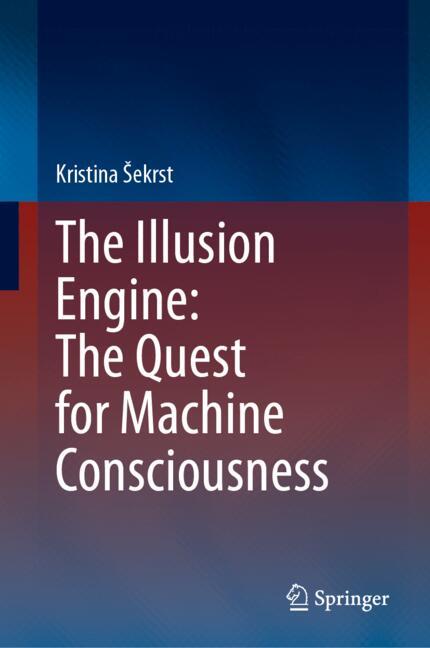
The Quest for Machine Consciousness
A study of mind, meaning, and machine cognition, written where philosophy, neuroscience, and artificial intelligence meet.
Hardcover, softcover, and eBook. Read a preview.
Hardcover · Softcover · eBook
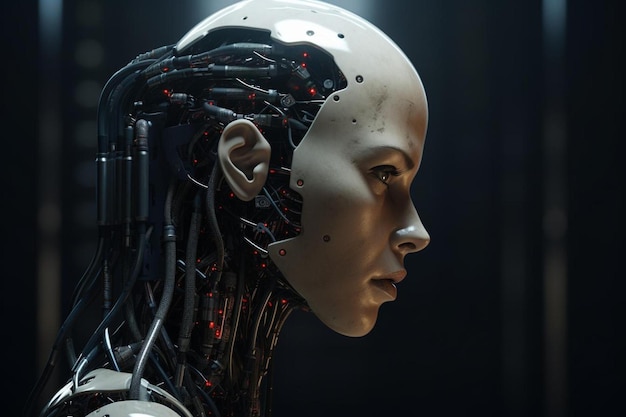
What does it mean for a machine to think, and could a mind ever be made rather than born?
The Book
Can an artificial system ever experience the world as we do? The Illusion Engine works through that question across philosophy, neuroscience, and the architecture of modern AI, following how artificial systems process language, reason, and simulate thought.
The book connects large language model hallucinations, computational proto-qualia, and the deeper puzzle of telling consciousness apart from its convincing imitation. It is written for the philosopher, the AI researcher, the student, and anyone drawn to the nature of mind in the age of machines.
Rigorous in argument and accessible in voice, it treats theory and engineering as two views of one question: what intelligence is, in humans and in the systems we build.
Inside
Praise
Kristina Šekrst herself emerges as a representative figure of a woman in contemporary science, whose research output vividly testifies to the achievement of those intellectual horizons that until recently remained inaccessible.— Alisa Zviagina, University of Zagreb
The book’s greatest value is that its author comes from both an engineering and a humanistic background, something exceptionally rare in artificial intelligence.— Sandro Skansi, author of Introduction to Deep Learning
Rigorous about the philosophical material in a way that engineering books typically are not.— The Consciousness AI
About the Author
Kristina Šekrst is an Assistant Professor at the Center for Cognitive Science, University of Zagreb and a machine-learning lead at Meedan working at the crossroads of philosophy, artificial intelligence, and cognitive science, with a Ph.D. in justification logic. Her research explores how artificial and biological systems process language, reason, and simulate thought, especially in the fields of astrobiology, philosophy of mind and language, and AI interpretability.
In industry she has worked as a principal software engineer and was part of the team that first identified prompt injection vulnerabilities in large language models, applying her technical work to practical and ethical challenges in AI.
Bringing theory and practice together, she works to better understand the foundations of intelligence, both human and artificial, as well as the forms it might take beyond Earth. The Illusion Engine is the start of that work.
Find Me · Contact
For a draft version for research perusal, or for press, talks, and review copies, get in touch directly.